Celebrity
What Michelle Obama Wants Women to Know About Confidence and Growth
December 11, 2025


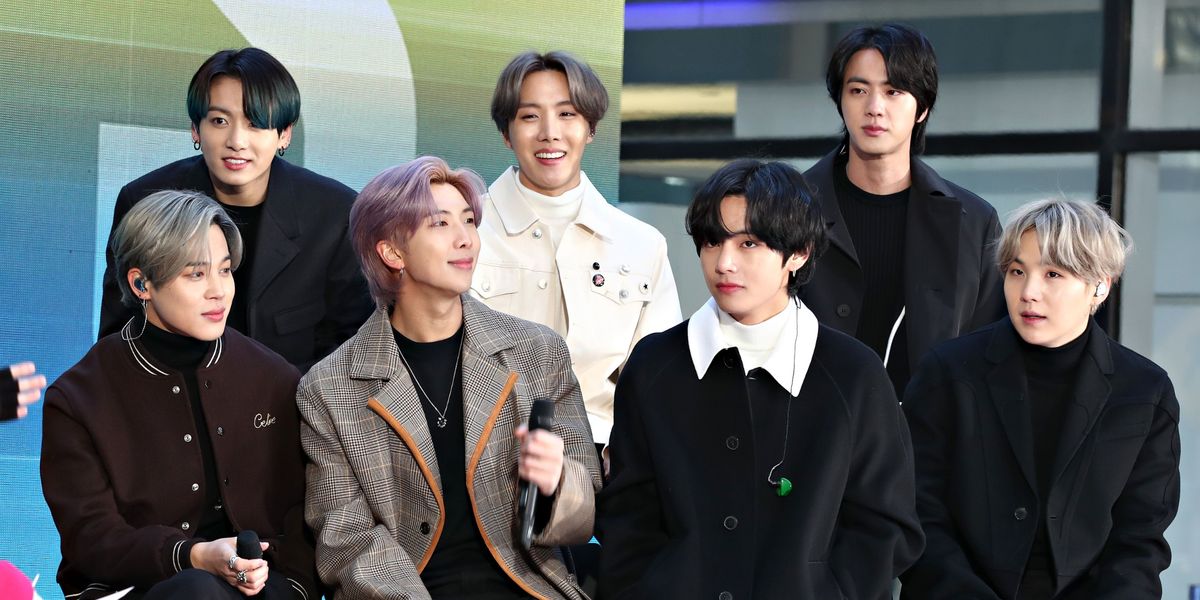
BTS did not become a global phenomenon by relying on mystery or distance; their rise shows what happens when stars treat communication as a daily practice and fans respond by turning loyalty into action.
BTS has become one of the most powerful names in pop music, with a fan base so organized and devoted that their influence extends beyond streaming and concert tickets.

V, Suga, Jin, Jungkook, RM, Jimin and J-Hope of BTS attends the 64th Annual GRAMMY Awards at MGM Grand Garden Arena on April 03, 2022 in Las Vegas, Nevada. | Source: Getty Images
The group, created by a Korean management company formerly called "Big Hit," has broken records once held by Justin Bieber and The Jackson 5 and amassed a global following often cited at around 100 million fans.
In 2019, BTS joined The Beatles and The Monkees as only the third band in 50 years to place three albums at the top of the Billboard 200 in the same year.
Harvard Business School associate professor Doug Chung and research associate Kay Koo examined how BTS built and maintained this level of devotion, focusing on the band’s communication habits and the systems that allowed fans, known as the ARMY (Adorable Representative M.C. for Youth), to mobilize with remarkable consistency.

V, Suga, Jin, Jungkook, RM, Jimin, and J-Hope of BTS attend 102.7 KIIS FM's Jingle Ball 2021 Presented By Capital One at The Forum on December 03, 2021 in Inglewood, California. | Source: Getty Images
The scale of BTS’ fandom is not just a cultural curiosity; it has been treated as a serious business asset. Chung and Koo noted that a large, loyal following was a major part of what investors were buying when the group’s management company raised $50 billion in its 2020 IPO. That kind of valuation suggests that fan trust can function like capital — something that can be built, protected, and leveraged over time.
The way BTS’ supporters behave is often described in unusually active terms. Instead of simply buying products, fans have been known to elevate campaigns, organize promotion, and even support distribution efforts with gestures like sending flowers. The raw loyalty is not accidental. It emerges from a long pattern of interaction that fans interpret as genuine.

V, Jungkook, Jimin, RM, Jin, J-Hope and Suga of the South Korean pop group BTS speak at the daily press briefing at the White House on May 31, 2022 in Washington, DC. | Source: Getty Images
Chung’s takeaway from the group’s strategy is simple: credibility comes from consistency and tone. “They’re authentic and genuine,” Chung says. “They would directly communicate with the fan base. The effective use of social media was how they created an ecosystem.”
That idea of an “ecosystem” is important. BTS didn’t just post promotional content; they participated in an ongoing loop of updates, personal moments, and feedback that made fans feel like insiders rather than spectators. Over time, that pattern creates trust, and trust encourages participation. Participation, in turn, pushes visibility higher, which attracts new fans, and the cycle continues.
This approach also shows how modern celebrities operate differently than older ones. For decades, fame often relied on distance: rare interviews, carefully staged appearances, and a sense that access was limited. BTS helped popularize a different model that treats access and communication as a central product.

Jungkook, V, Jimin, Jin, RM, J-Hope and Suga of BTS perform onstage during the 64th Annual GRAMMY Awards at MGM Grand Garden Arena on April 03, 2022 in Las Vegas, Nevada. | Source: Getty Images
A major part of that strategy involves platforms built specifically for artist-fan interaction. Weverse, launched in 2019, has become one of the three most popular South Korea-based platforms, along with Lysn and Universe, through which K-pop stars, and even non-Korean celebrities, communicate with fans.
Each platform has its own ecosystem and business alliances. Lysn’s “DearU Bubble” feature, commonly known as “Bubble,” was popularized by SM Entertainment acts and has expanded to include use by other management companies as well.
What these platforms share is a chat-style format that mimics everyday messaging. Fans can interact with artists in a way that feels conversational, not like a press release. That feeling, whether or not it’s always truly reciprocal, helps create the sense of proximity that fuels deep loyalty.

J-Hope, Jin, Jungkook, V, Megan Thee Stallion, RM, Suga, and Jimin pose during the 64th Annual GRAMMY Awards at MGM Grand Garden Arena on April 03, 2022 in Las Vegas, Nevada. | Source: Getty Images
One of the most revealing elements is that fans often pay for this kind of closeness. On services like “Bubble,” users pay to access their favorite stars’ content. That structure turns communication into a subscription product, not merely a marketing tool.
The model works because it monetizes something fans already crave: connection. When fans believe an artist is speaking directly to them, the relationship feels more personal, and paying becomes easier to justify. It also creates a consistent touchpoint that keeps fans engaged even between album releases or tours.
Despite other platforms asking for payments to view updates, BTS's Weverse generally allows users to interact with their idols for free. If any, there are only some premium features that require payment, like having an ARMY membership to access tour pre-sales.
Chung and Koo’s analysis suggests that BTS offers lessons that extend beyond pop stardom. The band’s success shows that loyalty grows when audiences feel respected, included, and regularly acknowledged.
In business terms, BTS didn’t just build a customer base; they built a community with shared language, rituals, and a sense of mission.
December 11, 2025

November 29, 2025
December 19, 2025
It also demonstrates how modern fandom can operate like a distributed marketing team. When communication is steady and trust is high, fans voluntarily do the work of promotion — boosting visibility, shaping narratives, and defending the brand in public spaces.
BTS’ rise illustrates a modern celebrity blueprint built on consistent communication, a carefully nurtured sense of authenticity, and platforms designed to make fan connection feel daily and personal.
Their relationship with the ARMY shows how trust can transform spectators into participants — and participants into an organized force capable of propelling records, sales, and even billion-dollar business outcomes.
In an age where attention is fragmented, BTS stands out for treating connection not as a bonus, but as the foundation.